





Viet Nam – China Railways: From Border Congestion to a More Predictable Logistics Corridor

24/03/2026
Reduce border delays, control costs, and improve lead times with Viet Nam–China rail logistics for cross-border supply chains.
For years, cross-border trade between Viet Nam and China has relied heavily on road transport. This has consistently exposed businesses to congestion at border gates, fluctuating costs, and unpredictable delivery timelines.
The acceleration of railway connectivity between the two countries is opening a new direction: reducing dependence on traditional border trade while shaping a more stable and predictable logistics corridor for businesses.
The acceleration of railway connectivity between the two countries is opening a new direction: reducing dependence on traditional border trade while shaping a more stable and predictable logistics corridor for businesses.
1. The cost and congestion challenge in Viet Nam’s logistics
Road transport routes via Lang Son and Lao Cai have long been the primary option. However, this model reveals structural limitations:
- Seasonal congestion: Particularly severe for agricultural products and manufacturing components
- Unstable transit times: Directly affecting production planning
- Rising additional costs: Driven by border delays and sudden changes in customs policies
For many businesses, logistics is no longer just a cost centre, but an operational risk that must be controlled.
2. Rail connectivity as a structural lever for logistics
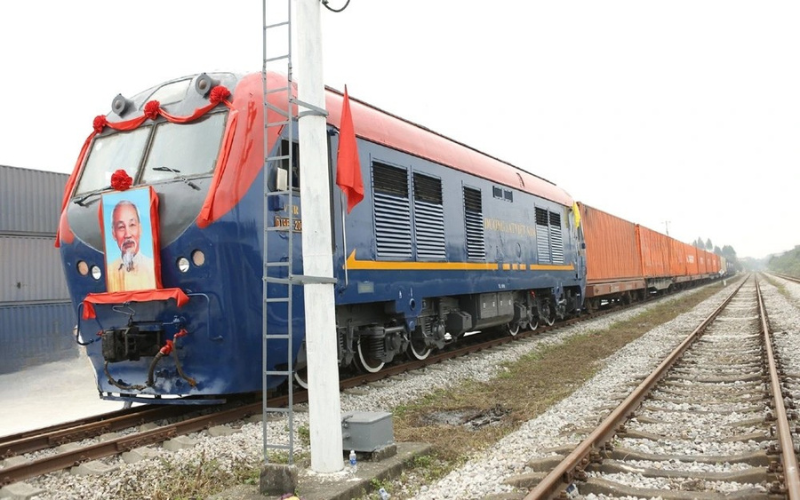
Key routes such as Ha Noi – Dong Dang and Lao Cai – Ha Noi – Hai Phong are being positioned as strategic transport corridors.
Rather than simply adding another transport option, rail is gradually reshaping the logistics system:
- Cost efficiency: More effective than long-haul road transport
- Fixed schedules: Greater operational stability
- Expanded connectivity: Integration with international transport networks
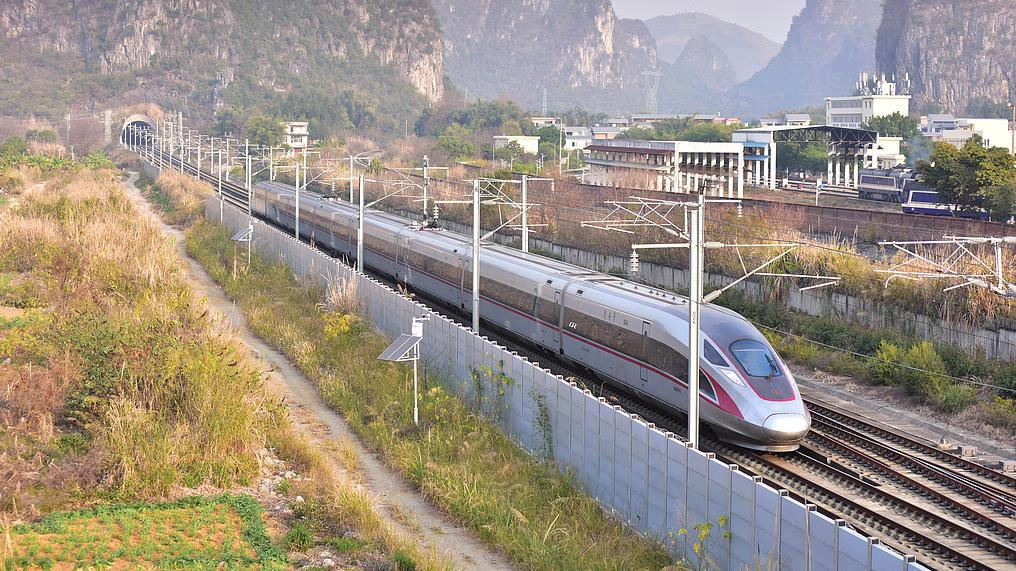
Hanoi–Dong Dang and Hai Phong–Ha Long–Mong Cai railway lines expected to be completed this year (Source: Tien Phong)
3. Modal shift: The rise of rail logistics
Infrastructure development is driving a shift from road transport (road) to rail transport (rail), creating a balanced option between cost and transit time:
| Mode | Advantages | Limitations |
| Road | Flexible, fast | High congestion risk, cost volatility |
| Sea | Cost-efficient | Longer transit time |
| Rail | Stable, moderate transit time | Dependent on rail infrastructure |
This shift enables multimodal transport solutions, optimising the entire journey rather than individual legs.
Businesses can now manage cost, lead time, and reliability simultaneously, instead of trading one for another.
4. Reducing border dependency: The key transition
A fundamental shift lies in reducing reliance on land border crossings.
By moving to rail:
- Cargo is no longer fully dependent on border congestion
- Risks from seasonal disruptions and policy changes are reduced
- Long-term operational planning becomes more feasible
5. Asia–Europe connectivity: Expanding transport options
Viet Nam–China railways also act as a bridge to the broader Asia–Europe rail network.
Amid volatility in ocean freight, rail provides an additional option for businesses to:
- Diversify transport routes
- Reduce dependence on a single mode
- Strengthen resilience against supply chain disruptions
The development of Viet Nam – China railways is not simply an addition of a new transport mode, but a shift in how supply chains are structured and managed.
From reducing border dependency to enabling international connectivity, rail logistics introduces a new approach: more stable, more predictable, and more flexible in the long term.
Explore how rail transport and multimodal solutions can optimise your Viet Nam–China trade lanes. Contact us for tailored advice!